
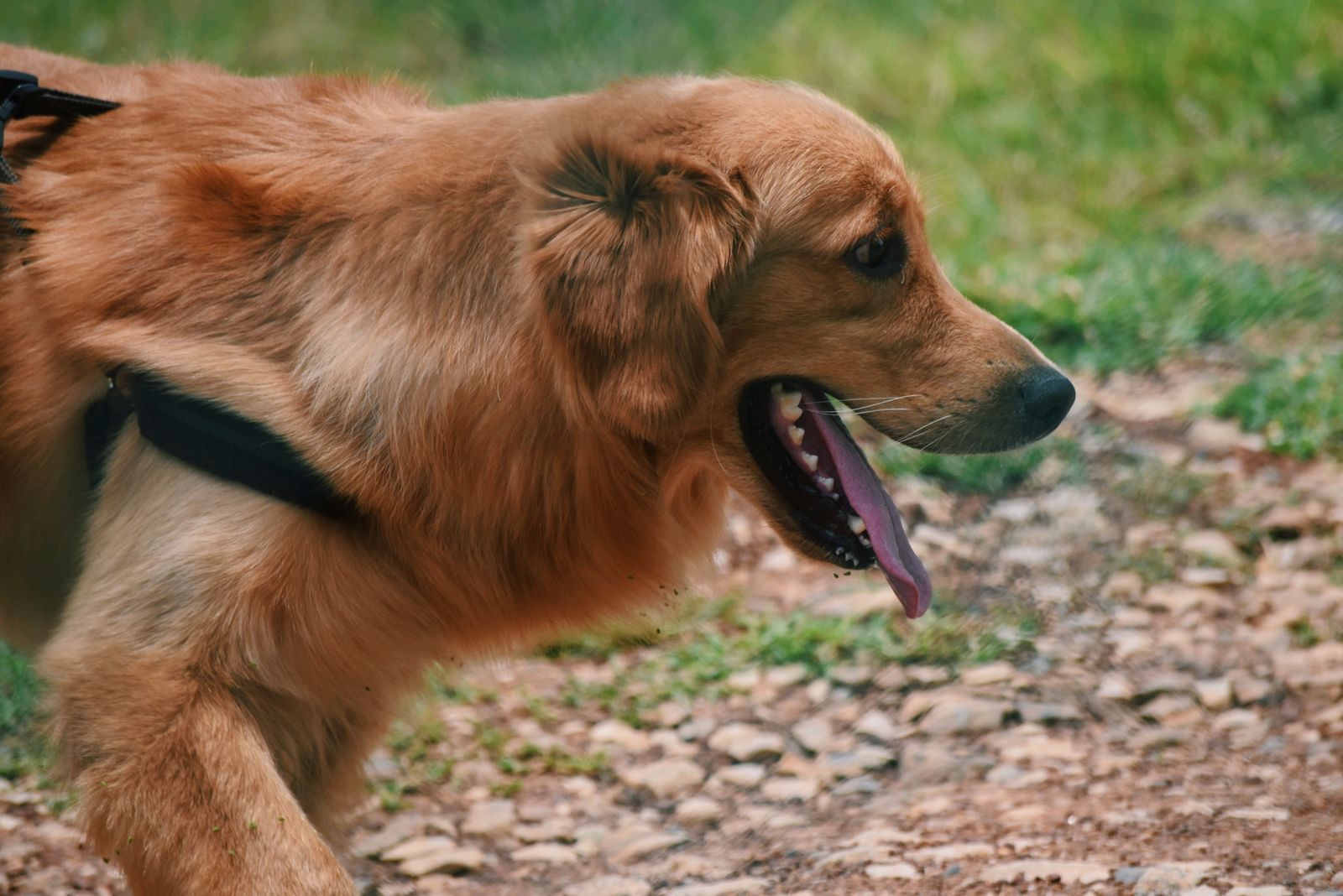
Heatstroke happens when a dog’s body heats up faster than panting can cool it down. Prevent it by walking early in the morning, providing shade and fresh water, and never leaving your dog in a parked vehicle. If your dog is panting heavily, drooling, weak, or stumbling in the heat, start cooling and see a veterinarian right away.
Why dogs overheat faster than people
People cool off mainly by sweating over their whole body. Dogs cannot do that. They rely almost entirely on panting, which moves air over the moist surfaces of the mouth and airway so heat can escape as breath. It is a clever system, but it has limits, and on a hot, humid day those limits arrive much sooner than most owners expect.
A thick coat, an eager temperament, and a body built close to warm pavement all work against a dog in summer. Many dogs will also keep chasing a ball or following their family long past the point where they should rest. That combination is why heatstroke can develop quickly, even on days that feel only moderately warm to us in North Surrey.
High-risk situations during a Surrey summer
The most dangerous situation is a parked car. Even with the windows cracked, the inside of a vehicle heats up far beyond the outdoor temperature in a very short time, and a dog left inside has no way to escape it. The safest rule is simple: never leave your dog in a parked vehicle in warm weather, not even for a quick errand.
Other everyday moments carry risk too. Midday walks expose dogs to the strongest sun of the day. Sun-baked decks, driveways, and pavement can burn paw pads and radiate heat up into a dog’s body; if the surface feels hot to the back of your hand, it is too hot for bare paws. Intense games of fetch or rough play in the heat can push a dog past its cooling capacity before anyone notices something is wrong.
Dogs that need extra protection
Flat-faced breeds such as pugs, French bulldogs, and boxers have shortened airways that make panting far less efficient, so they overheat more easily than long-nosed dogs. Seniors, overweight dogs, and dogs with thick or double coats also struggle to shed heat, as do dogs with heart or breathing conditions. If your dog fits any of these descriptions, treat warm days with extra caution.
For these higher-risk dogs, small choices add up: shorter outings, more shade breaks, and a watchful eye on their breathing and behaviour. If you are not sure how much summer activity is safe for your dog’s age, weight, or breed, our wellness program visits are a good place to talk through a plan that fits your individual pet.
Early warning signs every owner should know
The earliest sign is usually panting that is heavier, louder, or faster than normal for your dog, often with thick drooling. As overheating progresses, you may notice the gums turning a bright red colour, weakness or unwillingness to keep walking, stumbling or wobbling, and a dog that seems dazed or slow to respond to you.
Because you know your dog’s normal behaviour better than anyone, trust your instincts. A dog that suddenly lags behind, seeks shade, or lies down and will not get up on a warm day is telling you something. Heatstroke is far easier to interrupt in the early stages than to treat once it has taken hold, so act on the first signs rather than waiting to see if they pass.
What to do first if your dog overheats
Move your dog to shade or an air-conditioned space right away and stop all activity. Pour cool, not ice-cold, water over the body, especially the belly, armpits, and paws, and offer small amounts of water to drink rather than letting your dog gulp a large bowl at once. A fan or moving air over wet fur helps the cooling along.
Then head to a veterinary clinic immediately, even if your dog seems to perk up. Overheating can cause internal harm that is not visible from the outside, and your veterinarian can examine your dog and use pet diagnostics to check how the body is coping. Our urgent care team sees heat-related emergencies during clinic hours, and calling ahead as you drive lets us prepare for your arrival.
Preventing heatstroke all summer long
Build your dog’s routine around the coolest parts of the day. Walk early in the morning or later in the evening, keep sessions shorter and calmer in warm weather, and stick to grass and shaded routes where you can. At home, make sure there is always shade to rest in and fresh, cool water available, whether your dog is in the yard or out with you around Fraser Heights and Guildford.
Above all, never leave your dog in a parked vehicle, and plan outings so your dog can stay home on hot days when errands cannot wait. If your dog is overweight, senior, or flat-faced, ask about a summer plan at your next visit; our medical services team can help you manage weight, coat care, and any breathing concerns before the hottest weeks arrive.
Frequently asked questions
How do dogs cool themselves down?
Dogs cool themselves mainly by panting, which releases heat through the breath, along with a small amount through their paw pads. Because they cannot sweat over their bodies the way people do, they lose the ability to keep up with heat much sooner than we do.
Is it ever safe to leave my dog in the car on a warm day?
No. A parked car heats up far beyond the outdoor temperature in a short time, even with the windows cracked, and dogs have no way to escape that heat. Leave your dog at home in warm weather rather than in a vehicle, even for a brief stop.
What are the first signs of heatstroke in a dog?
Heavy or frantic panting and thick drooling are usually the first signs. Watch also for bright red gums, weakness, stumbling, or a dog that lies down and will not continue walking. If you see these signs, start cooling and head to a veterinarian right away.
Should I use ice water to cool an overheated dog?
No, use cool water rather than ice water. Pour it over the body, especially the belly and paws, move your dog to shade, and offer small drinks. Then go straight to a veterinary clinic, because a dog can look recovered while still being unwell inside.
Which dogs are most at risk of heatstroke?
Flat-faced breeds, seniors, overweight dogs, and dogs with thick coats are at the highest risk, along with dogs that have heart or breathing conditions. These dogs need shorter, cooler outings and closer watching in summer than a young, fit, long-nosed dog would.