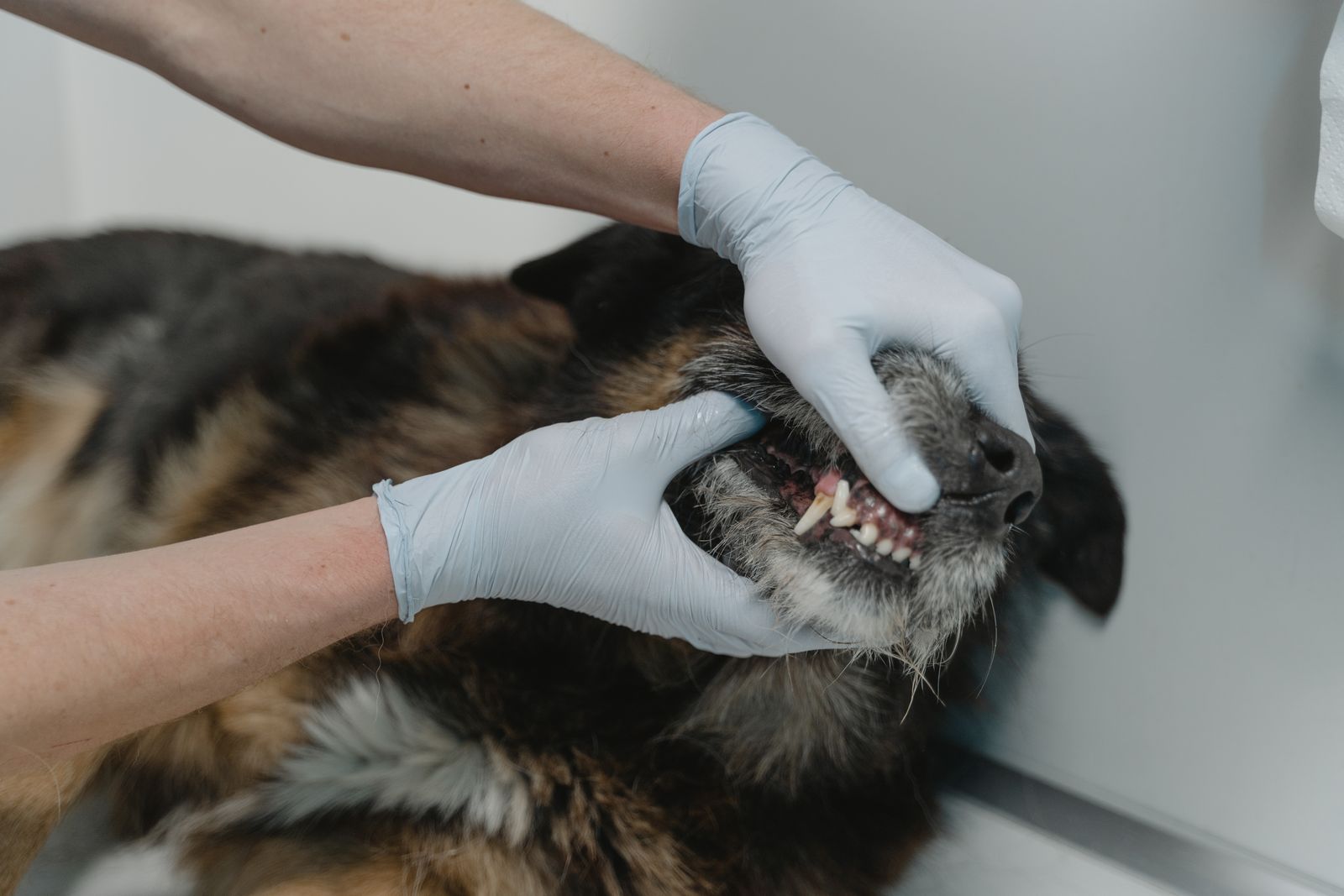
A dog dental cleaning is a professional procedure performed under general anaesthesia, where the veterinary team removes plaque and tartar from above and below the gumline, takes dental X-rays, and polishes the teeth. Anaesthesia allows a thorough cleaning and examination beneath the gums, where most dental disease begins and where it cannot be seen otherwise.
If you live in Fraser Heights or anywhere across North Surrey, your dog’s dental care is one of the most overlooked parts of routine pet health. Dental disease is common in dogs, and because it develops slowly beneath the gumline, many owners do not notice until it is advanced. A professional cleaning is the foundation of keeping it in check. As an AAHA-accredited practice, the team at Ridgeview Animal Hospital follows the association’s standards for anaesthesia, monitoring, and dental care, so you know what to expect at every step.
How to tell your dog may be due for a cleaning
Dogs are good at hiding mouth discomfort, so the signs are easy to miss. Some things worth raising with your veterinarian include persistent bad breath, yellow or brown buildup along the teeth, red or swollen gums, gums that bleed during chewing, reluctance to eat or dropping food, and pawing at the mouth. A change in how your dog eats or plays can be a clue too. These may be a sign of dental disease rather than proof of it, which is exactly why an oral exam matters: the veterinarian can look closely and, where needed, recommend the next step. If you have noticed any of these at home, booking a wellness check at the Fraser Heights clinic is a sensible first move. Catching changes early usually means simpler care and a more comfortable dog.
What happens during a dog dental cleaning
The day begins with a pre-anaesthetic exam and bloodwork to confirm your dog is a good candidate for anaesthesia. Once your dog is comfortably under, the team places an intravenous line and monitors vital signs throughout, including heart rate, breathing, blood pressure, oxygen levels, and temperature. They scale away plaque and tartar from every tooth surface, including below the gumline where buildup does the most harm. Dental X-rays let the team evaluate the tooth roots and the bone beneath the gums, areas a visual check alone cannot reach. After scaling, each tooth is polished to leave a smooth surface that resists new plaque. If any teeth are badly diseased, the veterinarian discusses options, including extractions, before going ahead, and you receive a written estimate first. Much of this happens under one roof at Ridgeview, which keeps digital and dental X-ray, ultrasound, and in-house bloodwork on site, so most dogs leave with a clear plan the same day. Owner and veterinarian Dr. Gunam Iyathurai built the practice around clear communication, and the team takes the time to explain what they found and what they recommend.
Why anaesthesia matters, and caring for teeth at home
The reason a complete cleaning needs anaesthesia is simple: the part of the tooth that causes the most trouble sits below the gumline, and a dog will not hold still for careful work there. Anaesthesia keeps your dog calm and pain-free, lets the team take accurate X-rays, and allows them to clean and examine every surface properly. Modern monitoring is what makes this routine and safe for healthy dogs, which is why the pre-anaesthetic checks matter so much. Between cleanings, you can do a great deal at home. Daily toothbrushing with a pet-safe toothpaste is the single most helpful habit you can build. Dental diets, appropriate dental chews, and water additives can support it, and your veterinarian can point you to options that suit your dog’s age, breed, and current dental health. Pairing consistent home care with regular professional cleanings is the most reliable way to protect your dog’s comfort and long-term health. Preventive care is almost always easier on your dog, and on you, than addressing advanced disease later.
Frequently Asked Questions
How do I know if my dog needs a dental cleaning?
Look for bad breath, discoloured teeth, red or bleeding gums, or a change in how your dog eats. Any of these is worth a veterinary exam. Many dogs benefit from a professional cleaning before obvious signs appear, so a routine check is the safest way to know where things stand.
Is anaesthesia safe for my dog’s dental cleaning?
For healthy dogs, the team lowers risk with a pre-anaesthetic exam, bloodwork, and continuous monitoring of vital signs throughout. Anaesthesia is what allows a complete, pain-free cleaning below the gumline. Your veterinarian will talk through your dog’s individual health before the day.
How often should my dog have a dental cleaning?
It varies by dog. Some need yearly cleanings, others less often, depending on breed, age, and home care. Your veterinarian will suggest a schedule after examining your dog’s mouth.
What can I do at home between cleanings?
Daily toothbrushing helps most. Pet-safe dental diets, chews, and water additives can support it. Ask the team which combination fits your dog.
Why are dental X-rays part of the cleaning?
Most of each tooth sits below the gumline where problems hide. X-rays let the team find issues like root disease early, before they become painful.