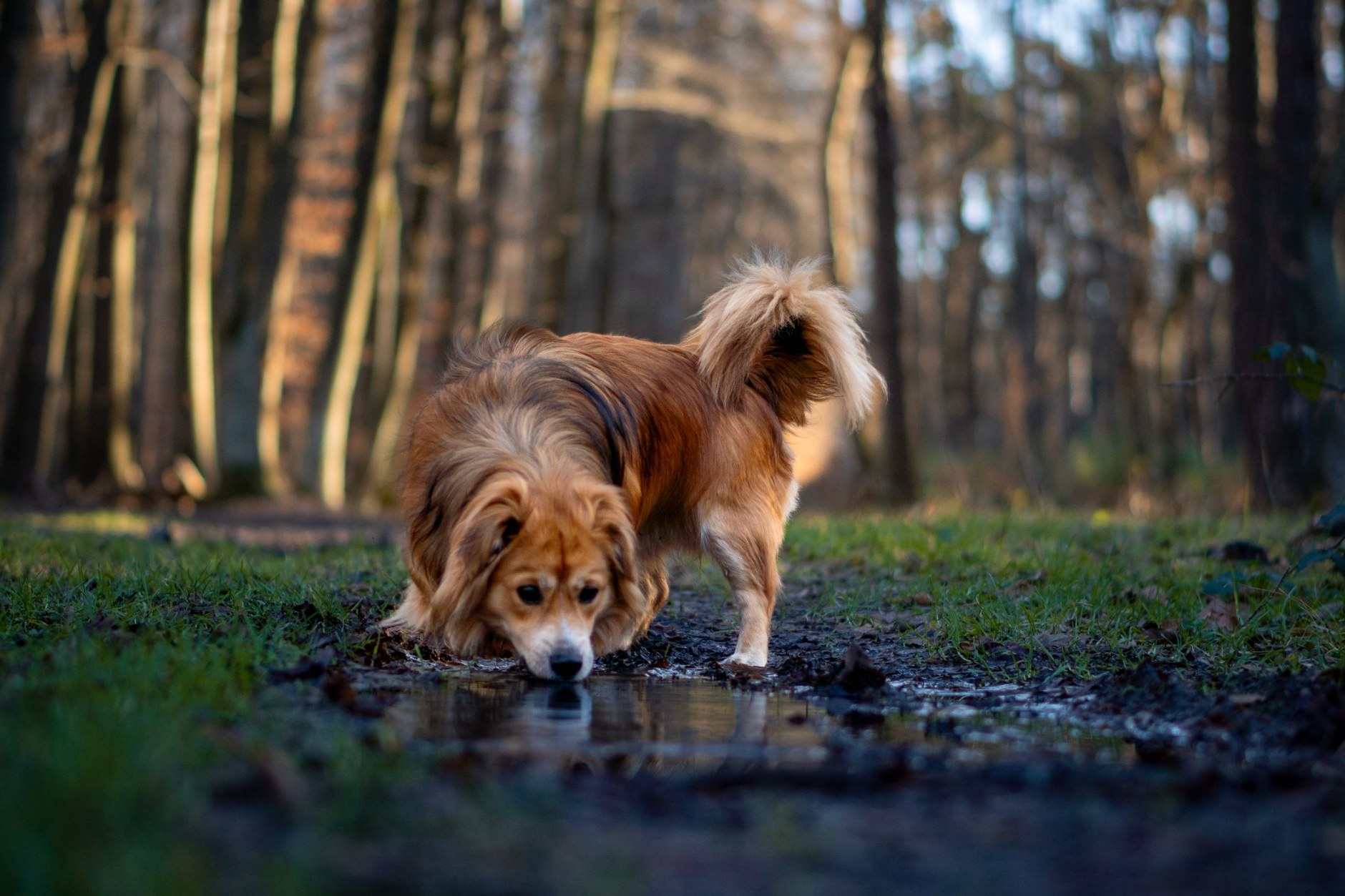
Giardia is a microscopic parasite picked up by swallowing water or soil carrying it, usually from another animal’s stool. Its cysts last for months in cold, damp ground, so autumn and winter suit it better than summer. The usual sign is soft, greasy, foul stool that keeps returning, and a stool sample is what confirms it.
Why the wet months are its season, not summer
Most owners assume the grim things a dog picks up outdoors belong to July. Giardia runs the other way, and the reason is simple once you know what the parasite is doing between hosts.
It leaves an infected animal as a cyst, a tough dormant form built to wait. What destroys cysts is drying out, direct sunlight and heat. What preserves them is cold, damp and shade. Public health guidance puts survival at several months in cold water or soil, and much shorter where conditions are dry, warm and sunny.
Which describes a Fraser Heights November almost exactly. The ground stays wet for weeks at a time, the sun is low and brief, the temperature sits above freezing, and the puddles along the greenbelt edges and the low corners of the off-leash areas simply stay there. A cyst left on dry, sunny August ground is finished far sooner. The same cyst in cold November mud can still be viable weeks later, and in the coldest, wettest corners for longer than that.
So the risk does not fall away when the weather turns. It quietly builds.
How a dog actually picks it up
Dogs swallow it. That is the whole route, and it is less disgusting than it sounds because the quantities involved are invisible.
- Drinking from puddles, ditches and slow streams on a walk. The most common route by a wide margin.
- Shared water bowls at parks, daycares, groomers and outside shops.
- Licking paws and fur after walking through contaminated ground. A dog does not need to drink anything to swallow a cyst.
- Nosing at another dog’s stool, or at ground where stool was picked up but residue remained.
- Puppies exploring everything, which is why they are over-represented, along with dogs from group settings.
It takes very few cysts to establish, and an infected dog can shed enormous numbers. That combination is why giardia moves quickly through a daycare, a litter or a household with several dogs.
What it looks like, and what it does not
Plenty of dogs carry it and show nothing at all. That matters for two reasons: a healthy-looking dog can still be seeding the park, and a normal-looking stool today does not rule it out.
When signs do appear, the pattern is reasonably characteristic:
- Soft, pale, greasy stool with a smell owners describe as distinctly worse than ordinary. The greasiness is the useful detail.
- Mucus, and rarely a trace of blood.
- It comes and goes. A few bad days, apparent recovery, then it returns. Owners often conclude the dog ate something and move on, which is how weeks pass.
- Gas, gurgling and urgency, including accidents overnight in a house-trained dog.
- Weight loss or a dull coat while eating normally, because the gut is not absorbing properly. This is the one that should move things along quickly, particularly in a puppy.
- In puppies, poor growth and failure to thrive.
What it usually does not cause is a sudden, dramatic, one-off upset in an otherwise bright adult dog. That picture points elsewhere, and our guide on why your dog might be vomiting covers when a sick stomach needs to be seen rather than watched.
Cats, and the question about people
Cats get it too, though less often, and indoor cats are not entirely exempt because cysts travel indoors on shoes and on the dog. A cat with intermittent soft stool deserves the same stool sample a dog would get.
The question we are asked most is whether it passes to the family, and the honest answer has two halves. Giardia comes in several types, and dogs mostly carry the canine-adapted ones, which are rarely found in people. Public health guidance is that you are unlikely to pick it up from a dog or cat.
The second half: a routine stool test tells us the parasite is present but not which type, so the sensible approach is ordinary hygiene rather than either alarm or complacency. Wash hands after picking up stool and before eating, keep children from the areas a loose-stool dog has used, bathe a dog who has stool on their coat, and wash their bedding. Households with a baby, an elderly relative or anyone whose immune system is suppressed should be more careful rather than less.
What we do about it
It starts with a stool sample, and bringing one with you saves a visit. A fresh sample, ideally from that morning, in a sealed bag or container. If the stool has been coming and going, collect from more than one day if you can, because shedding is intermittent and a single sample can miss it.
Testing is the part owners underestimate. A standard look under the microscope can miss a light shedder, so a specific test is used, and sometimes a repeat sample taken on alternating days. Our in-house laboratory means many results come back quickly rather than later in the week, and our pet diagnostics page sets out the imaging and laboratory work we run on site. What happens next depends on the result, your dog’s age and condition, and whether other animals in the house are affected, and our medical services team works that out with you.
Two things worth knowing before you start. Nothing from a shop, a cabinet or the internet is a substitute for finding out what is actually there, because several quite different causes of soft stool look identical from the end of a leash. And a dog who looks better is not necessarily clear, which is why we may ask for a follow-up sample rather than taking the improvement at face value.
Lowering the risk on an ordinary wet walk
You will not scrub a Surrey winter clean. You can take most of the exposure out of it.
- Carry water and offer it. A dog with a full belly of clean water is far less interested in the ditch. This single habit does more than everything else here.
- Steer around standing water. The shaded puddles that sit for days are the ones that matter, not moving water.
- Skip the communal bowl outside shops and at the park, and take your own.
- Pick up immediately, every time, including in your own yard. Cysts left behind outlast the leaves.
- Rinse and dry muddy paws and feathering after a greenbelt walk, before your dog grooms it off.
- Keep a dog with loose stool home from the park and daycare until you have an answer. One dog with an upset gut can seed a whole off-leash area.
- Think about the whole household. If one animal is affected, tell us about the others, so we can advise which of them need checking.
A dog who keeps turning up with the same gut trouble is also worth a broader look, and the annual visit under our wellness program is where that conversation usually happens rather than during a flare.
When it needs us sooner
Most giardia is a booked appointment with a stool sample, not an emergency. Come in the same day, through our urgent care, if your dog is a young puppy or a senior with ongoing loose stool, is vomiting as well and cannot keep water down, has blood in the stool beyond a streak, has become flat or weak, has sunken eyes or tacky gums, or has a painful belly.
We are open Monday to Friday from 8:30 AM to 7:00 PM and Saturday from 9:00 AM to 4:00 PM, and we are closed on Sunday. Sunday is the one full day we are not here, and a dehydrating puppy cannot wait it out, so if that picture appears on a Sunday or after we close, go to an open emergency veterinary hospital and call ahead on your way rather than waiting for us to open.
Common questions
My dog drinks from puddles constantly and has always been fine. Is this overblown?
For many dogs, yes, nothing comes of it. The issue is that the odds are not fixed across the year. Cysts persist for months in cold, wet ground and far less in dry summer heat and sun, so the same habit carries more risk in November than it did in July. Carrying water is a small change that removes most of it.
How soon after exposure would I see anything?
Usually about one to two weeks, though plenty of dogs never show a thing. That gap is why owners rarely connect it to a particular walk, and why it is worth mentioning the parks and trails your dog uses when you bring a sample in.
Can I just bring a sample without the dog?
Call us and ask, because it depends on the situation. If your dog is otherwise bright and this is a first look, a sample alone is often a sensible start. If they have lost weight, are very young or very old, or have been unwell for a while, we would rather see them, since the examination tells us things the sample cannot.
One of my dogs has it. Do the others need checking?
Tell us about all of them. Housemates share water bowls, yards and grooming, and a dog showing nothing at all can still be shedding. That does not automatically mean every animal needs the same course of action, so let us advise which of them actually need checking.
Will it clear up by itself?
Sometimes, and that is exactly what makes it frustrating, because the signs easing is not the same as the parasite being gone. A dog can look fine and still be shedding into the yard. Get the answer rather than guessing from how the stool looks this morning.
Should I be worried about my children?
Be sensible rather than worried. Dogs mostly carry types that rarely affect people, and public health guidance is that catching it from a pet is unlikely. Hands get washed after picking up stool and before eating, children stay off ground a loose-stool dog has used, and anyone in the house with a suppressed immune system takes extra care.
Speak to the team at Ridgeview Animal Hospital
If your dog has had soft, greasy or on-and-off stool for more than a few days, bring a fresh sample and book an appointment with us. If a puppy or an older dog becomes flat, keeps vomiting or cannot hold water down, that needs same-day attention, and outside our hours or on a Sunday go to an open emergency veterinary hospital and call ahead before you leave.
Published by the team at Ridgeview Animal Hospital.
This article is educational in nature and is not a replacement for hands-on assessment of your own pet by a veterinarian.
Ridgeview Animal Hospital
10833 160 Street, Unit 605, Surrey, BC V4N 1P3
Phone: (604) 359-6464
Email: info@ridgeviewvethospital.com
Hours: Monday to Friday 8:30 AM to 7:00 PM; Saturday 9:00 AM to 4:00 PM; closed Sunday